Systems Built to Outlast Decades of Storms
Metal Roofing Services in Rochester and across Southeast Michigan for properties requiring maximum durability, energy performance, and minimal long-term maintenance
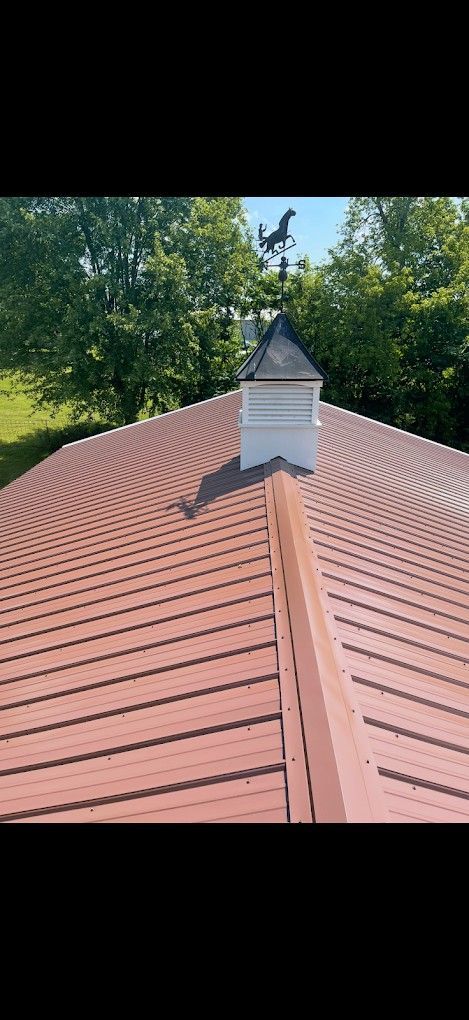
Metal roofing installs as interlocking panels that expand and contract with temperature changes without cracking, shed snow before dangerous buildup occurs, and reflect solar radiation that would otherwise transfer into attic spaces and increase cooling costs. Platinum Exteriors LLC handles metal roof installation and replacement for both residential and commercial properties in Rochester, Rochester Hills, Macomb Township, and throughout Southeast Michigan, positioning these systems as premium upgrades where fifty-year service life and low maintenance justify higher initial cost compared to asphalt alternatives. Metal roofing suits properties where long ownership timelines make lifecycle cost more important than upfront expense, where steep utility bills indicate poor thermal performance from current roofing, or where frequent repairs on aging asphalt roofs have become an ongoing expense drain.
Installation differs from asphalt work because metal panels require substrate preparation that accommodates thermal movement, fastening patterns that allow expansion without panel distortion, and underlayment systems that handle condensation potential when temperature differentials create moisture on panel undersides. Michigan winters create ideal conditions for metal roofing performance—snow slides clear before loading becomes structural concern, ice dams rarely form because metal surface temperature stays more uniform, and wind resistance exceeds asphalt ratings because interlocking seams distribute uplift forces across the entire roof plane rather than relying on individual shingle adhesion.
Request a consultation to compare metal roofing performance and cost against your current roof condition and expected property ownership timeline.
What Metal Roofing Actually Accomplishes
Panel installation begins with battens or furring strips that create ventilation space between metal and roof deck, preventing condensation accumulation and allowing thermal expansion without panel buckling. Panels interlock along edges with concealed fasteners that avoid exposed screw penetrations where weather can infiltrate, and trim pieces seal transitions at eaves, rakes, and ridges using closure strips that block wind-driven moisture while allowing ventilation airflow. Proper installation accounts for thermal movement by using fasteners with rubber washers that compress slightly as panels expand in summer heat or contract during winter cold.
After installation, your roof reflects sunlight rather than absorbing it, which keeps attic temperatures ten to fifteen degrees cooler during summer and reduces air conditioning runtime noticeably. Snow accumulation clears naturally after storms without manual removal, ice dams disappear because uniform surface temperature prevents melt-refreeze cycles, and wind events cause no shingle loss because metal panels mechanically fasten along their entire length. Maintenance drops to occasional inspections rather than periodic shingle replacement, paint finishes last decades without fading significantly, and the roof remains watertight without the granule loss and adhesive failure that plague asphalt systems after fifteen to twenty years.
Insurance coordination for metal roofing involves documentation when upgrading from damaged asphalt systems, since coverage typically applies to replacement-in-kind unless policy includes upgrade provisions. This process clarifies which costs apply to covered storm damage versus elective material upgrades, ensuring transparent claim handling while documenting long-term performance benefits that justify premium material selection for property protection.
Metal roofing raises questions about performance characteristics, installation considerations, and how these systems compare to traditional asphalt over long timeframes.
Common Questions About This Service
What makes metal roofing worth the higher initial cost?
Metal systems last fifty-plus years versus twenty years for asphalt, require virtually no maintenance beyond inspections, reduce cooling costs through solar reflectance, and eliminate repeated replacement expenses that make lifetime cost lower despite higher installation price.
How does metal roofing perform during hail storms common in Michigan?
Metal panels dent under severe hail impact but rarely puncture or leak, and most residential profiles use gauges thick enough that typical hail causes no functional damage even if minor cosmetic denting occurs on flat panel surfaces.
Does metal roofing make more noise during rain?
Properly installed systems with solid decking and underlayment create no more interior noise than asphalt roofs, since sound transmission depends on substrate dampening rather than roofing material itself, though metal on open framing without solid decking does amplify rain noise noticeably.
Can metal roofing install over existing asphalt shingles?
Building codes in Rochester and across Southeast Michigan typically allow one layer of metal over asphalt if decking condition is sound, which eliminates tear-off cost and landfill waste, though two layers of old asphalt require removal before metal installation proceeds.
What color options work best for energy efficiency and appearance?
Light colors reflect more solar radiation and reduce cooling costs, while darker tones absorb heat but create more dramatic snow shedding through faster melt at panel surface, with color choice balancing aesthetic preferences against thermal performance priorities.
Platinum Exteriors LLC evaluates whether metal roofing suits your property based on roof pitch, structural capacity for panel weight, and how long-term performance benefits align with ownership plans. Schedule a property review to explore how metal roofing options compare to your current system and what installation involves for your specific building.